

Republished with permission from Telnova Finland
Author: Tommi Turunen
For an increasing number of foundries, predictive maintenance has become a practical way to reduce downtime, improve equipment reliability, and simplify day-to-day maintenance. The Finnish foundry Uusikaupunki Rautavalimo (URV) illustrates how condition monitoring can be applied effectively, even with limited maintenance resources.
An article published in Valimoviesti magazine (issue 4/2025, p. 30) describes how URV integrated predictive maintenance into its daily operations (link to the article at the end). In this article, we focus on the specific applications that are most relevant and transferable to other foundries.
Related article: FMEA: How to Use Failure Modes and Effects Analysis to Choose Sensors for Condition Monitoring
Foundry maintenance with limited resources
URV’s maintenance is carried out by a three-person team responsible for the entire production environment: ovens, compressors, conveyors, vibrating tables, silos, and auxiliary equipment.
When maintenance is carried out by a small team, not all items can be monitored continuously on site. Therefore, predictability is of great importance. Unexpected equipment failures can easily lead to production downtime, additional costs, and urgent repairs.
URV identified that the greatest risks were particularly related to:
- for demolition vibratory table motors
- filling levels of sand silos
- transformer temperatures
It was decided to target these sites for proactive condition monitoring in the first phase.
Condition monitoring in a foundry in practice
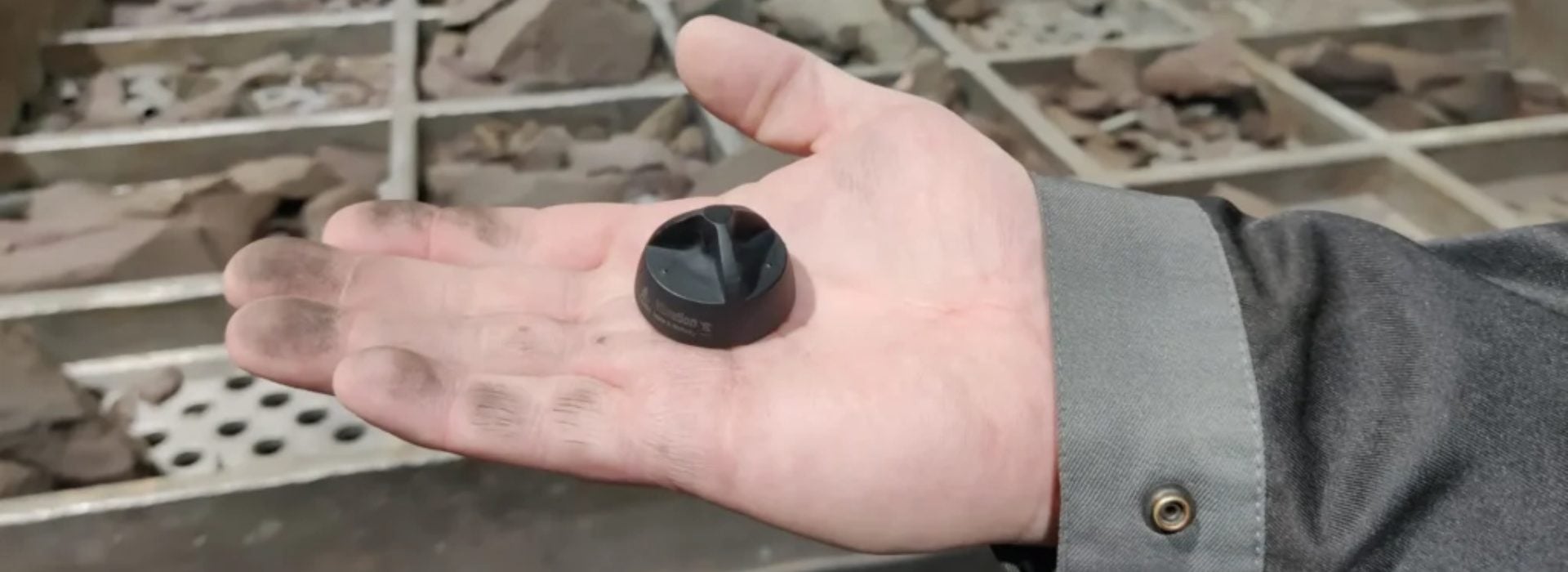
The El-Watch Neuron system used by URV is based on wireless sensors that measure, for example, temperature, power consumption, pressure, and vacuum.
Measurement data is transferred via sensors and base stations to a cloud service, from which maintenance can monitor the equipment’s status in real time on a computer or phone. When a value exceeds a set limit, the system automatically sends an alarm.
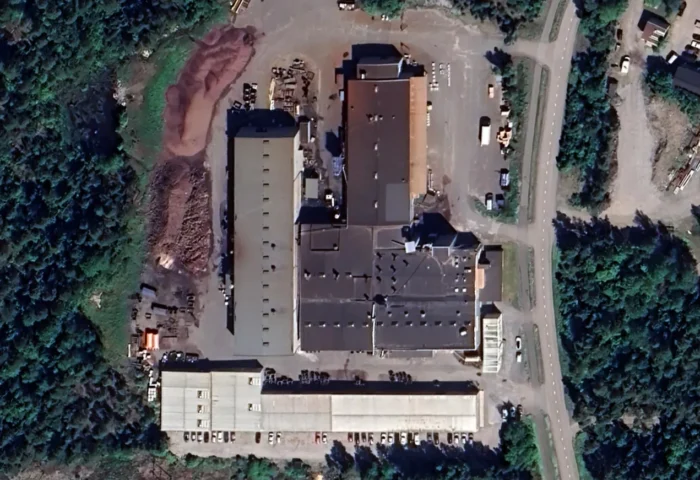
With URV, the entire 100 × 100-meter foundry area was covered with two gateways, even though the surrounding area is full of metal structures, machines, and partitions. The gateway range proved sufficient for the entire production area, without the need for separate amplifiers or additional structures.
The installation of the sensors and the commissioning of the system were completed in less than a day, without any cabling or production interruptions. Over 20 sensors were installed, and measurement data began appearing in the system immediately after commissioning.
Related article: Smart Safety in Manufacturing: How IoT Maintenance Makes People and Plants Safer
Proactive condition monitoring – URV foundry applications
Condition monitoring was initially targeted at equipment and process sites whose malfunctions directly affect production. In these sites, even a small deviation from normal can lead to production interruptions or high additional costs. Below are four examples of sites where URV actively utilizes condition monitoring.
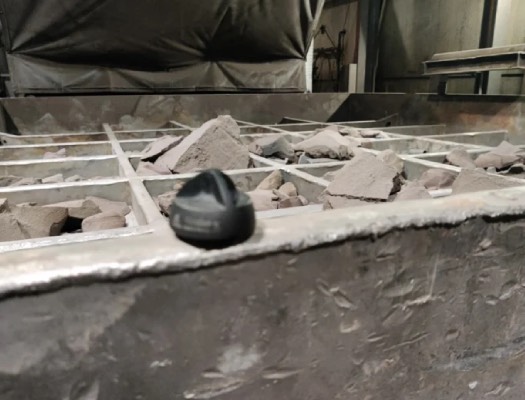
Demolition vibratory table motors
The motors of the demolition vibratory table are critical components for production and at the same time cost-intensive.
URV follows the engine’s:
- temperature ( Neuron Vibration )
- power draw ( Neuron Ampere )
Deviations in these values can indicate, for example, bearing failures or load problems. With the help of this information, maintenance can be scheduled according to actual needs. Previously, URV replaced engines just to be on the safe side.

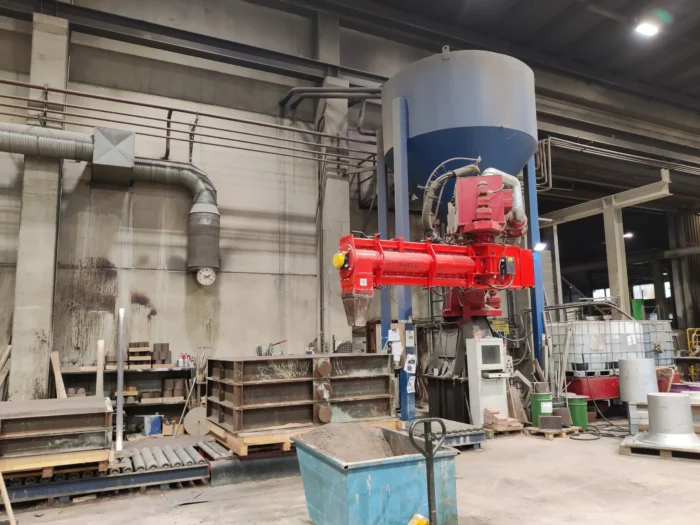
Sand silos
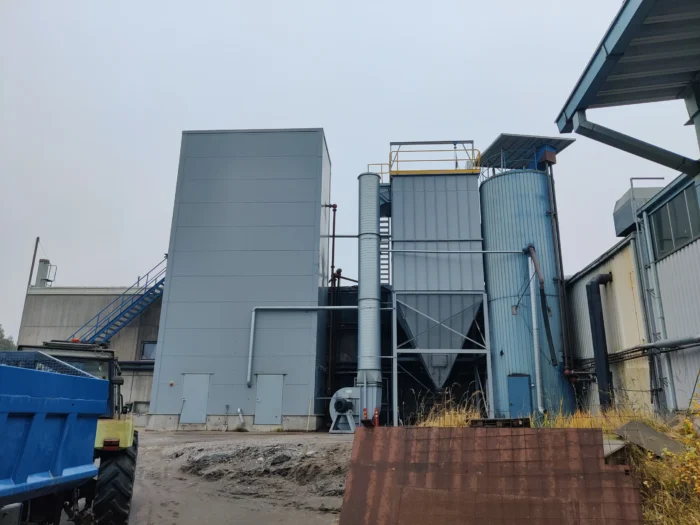
Monitoring the filling level of sand silos is a simple but critical application for production.
Running out of sand immediately stops production. Previously, the filling level had to be checked on site from the side of the silo, a time-consuming process.
The surface measurement data was transferred wirelessly (with a Neuron mA Digitizer sensor), enabling remote readings. The change to wireless measurement immediately made sand ordering planning easier and reduced production-related surprises.
Read more: Neuron Digitizer: The bridge between the analog and digital worlds
Sand transmitters
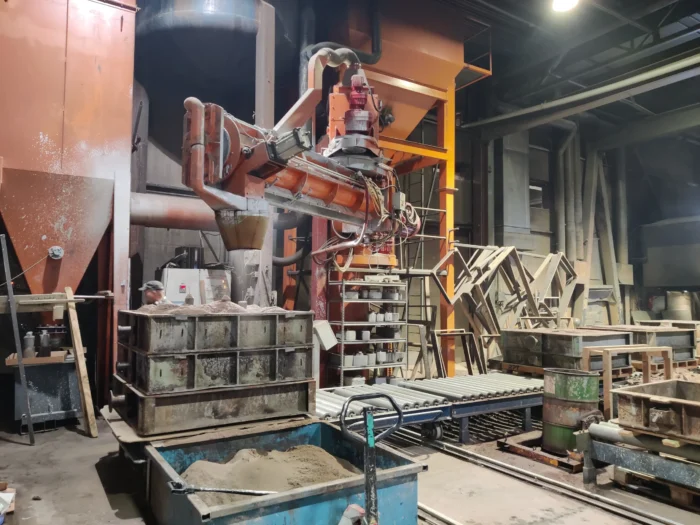
A malfunction in the sand conveyor halts sand circulation and, at the same time, mold production.
URV monitors sand transmitters, enabling immediate detection of malfunctions. This enables rapid response before the malfunction has time to cause a longer production outage.
Transformers
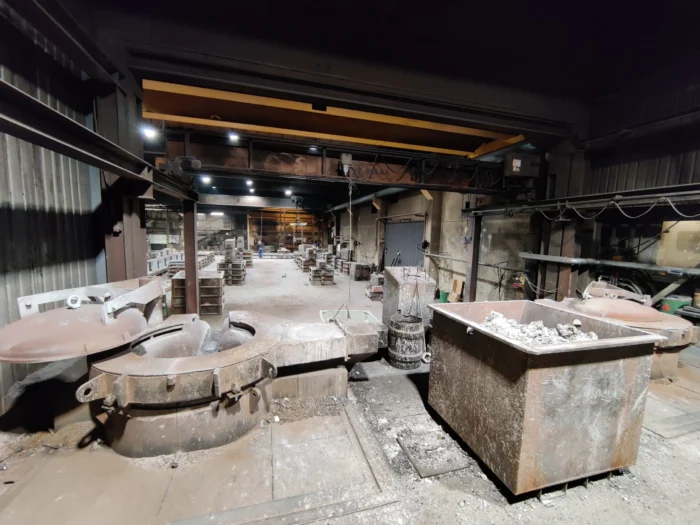
Temperature monitoring of transformers helps to identify overheating in time.
Previously, only a single maximum value was available; now, the temperature trend is visible in real time, making it easier to assess load peaks and potential risks.
Other applications of condition monitoring
In addition to the above, URV also monitors the following with the Neuron system:
- vacuum cleaners
- compressed air network pressure
- district heating inlet water pressure
The goal is the same in all cases: detecting significant changes in pressure over time.
The pressure measurement uses the Neuron Gauge Pressure, and the vacuum measurement uses the Neuron Vacuum Pressure.
What was learned? Predictability = maintenance manageability
According to URV’s experience, the biggest benefit of condition monitoring is improved maintenance predictability. When decisions are based on measurement data, maintenance can be planned, reducing the number of urgent repairs. With limited maintenance resources, this is reflected in the manageability of the work, which, in turn, provides greater peace of mind.
At the same time, URV’s example shows that predictive maintenance does not require a measurement system covering the entire factory at once. It is often sufficient to start with those items whose failure would cause the greatest production or financial impact – and these are exactly the items found in almost every foundry.
Related article: How wireless sensors enable a sustainable manufacturing industry
URV’s tip for other foundries
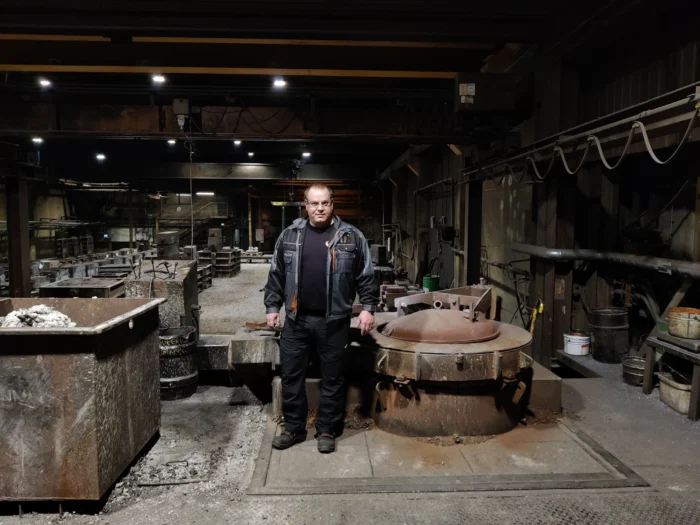
URV’s Foundry Director Mikko Räsänen summarizes the matter as follows:
“It’s worth looking at your own process and thinking about where measuring and monitoring could bring added value. El -Watch sensors are suitable for many applications, and implementation is really easy, even easier and faster than we expected. The operation is also clear and easy to learn. Our experiences have been nothing but positive.”Read more: Optimal sensor technology for optimal business expansion
Originally published by Telnova, Tommi Turunen, republished with permission.
Ennakoiva kunnossapito valimossa – Case Uudenkaupungin Rautavalimo(Finnish text)